Holly Jolly Mom
First Impressions: Warm, Whimsical, and Ready for Real Stitches
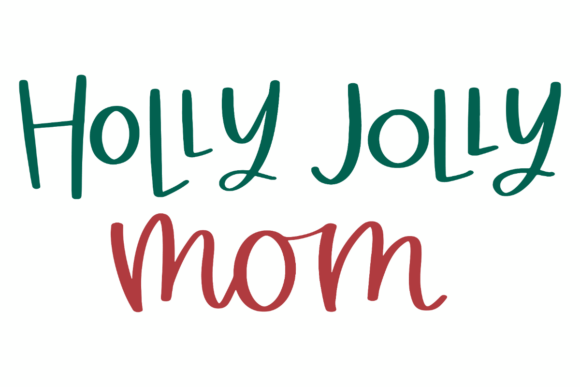
When I opened the Holly Jolly Mom embroidery file, what struck me first wasn’t just the holiday cheer—it was the thoughtful contrast between the playful, hand-drawn emerald green font and the flowing cranberry red script. This isn’t a generic “Merry Christmas” knockoff. It feels intentional, personal, and quietly confident—like something you’d stitch onto a gift you’re proud to give, not just another seasonal filler. As a designer who’s tested hundreds of digital embroidery files for craft businesses and Etsy sellers, I immediately pictured it on a soft cotton tote bag for a local mom-and-pop boutique: sturdy enough for daily use, gentle enough for gifting, and festive without leaning into kitsch.
A Design That Fits *Real* Projects—Not Just Mockups
I ran Holly Jolly Mom through several real-world scenarios in my studio. On a midweight cotton sweatshirt? Clean satin stitches held beautifully—no puckering, no thread breakage. On a linen tea towel? The script flowed naturally with the fabric’s subtle texture, and the emerald green popped against natural off-white without needing heavy underlay. For baby embroidery—say, a onesie or burp cloth—I’d recommend using lightweight tear-away stabilizer and reducing top tension slightly; the letterforms are open enough to avoid bulk but still legible at 3.5" wide.
It also translated well into an embroidered patch: clean edges, balanced fill stitch density, and no awkward gaps between letters. That makes it ideal for small shop products like aprons or pillow covers where clarity matters more than flash. As a holiday embroidery option for personalized gifts, Holly Jolly Mom lands right in that sweet spot—recognizable, warm, and emotionally resonant without being overly literal or cutesy.
Where to Use It Thoughtfully (and Where to Pause)
This design shines on stable, medium-weight fabrics: cotton twill, fleece-lined sweatshirts, canvas totes, and quilting-weight cottons. But it needs careful handling on stretchy knits (like jersey tees) or highly textured surfaces (think terry cloth towels or bouclé). The script’s graceful curves rely on consistent fabric support—if the base shifts mid-stitch, the cranberry line can blur or thin out.
Small hoop sizes (< 4") require extra attention: test the full layout before committing. While the design avoids tiny serifs or micro-details, the transition points between emerald and cranberry elements need space to breathe. On dark fabric, confirm your thread colors maintain enough contrast—especially the lighter emerald, which can mute on charcoal or navy without proper backing or thread choice. And on curved surfaces like caps? Stick to the front panel only, and avoid placing the script across the crown seam.
What It Adds to Your Handmade Product—and What It Doesn’t
Holly Jolly Mom elevates perceived value instantly. It reads as handmade *and* intentional—not mass-produced. Customers notice that difference in Etsy listings or craft fair booths. It supports brand consistency for small shops leaning into warm, inclusive holiday messaging (“mom” as caregiver, partner, friend, or chosen family), and it pairs well with minimalist packaging or rustic gift tags.
But it doesn’t solve every problem. It won’t magically fix poor stabilizer choices or incorrect thread tension. It won’t look crisp on ultra-thin poly-blend shirts without added backing. And while it works beautifully for commercial embroidery, remember: this is a graphics-category digital embroidery file—not an applique design or layered motif. Don’t expect built-in borders, frames, or decorative flourishes beyond the two-tone typography.
Practical Designer Notes You’ll Actually Use
- Always test first: Run Holly Jolly Mom on scrap fabric matching your final project’s weight and weave—even if you’ve used similar files before.
- Check thread color contrast: Try both emerald and cranberry on light and dark backgrounds in a printable mockup before stitching.
- Review stitch density: Look for areas where fill stitches might crowd—especially where the two fonts meet. Adjust underlay if needed for smoother coverage on textured fabrics.
- Confirm hoop size compatibility: Measure the design’s widest point and compare it to your machine’s max hoop capacity before loading.
- Inspect small details: Zoom in on the script’s terminals and the emerald font’s rounded corners—these define its hand-drawn charm and can get lost if scaled too small.
- Use proper stabilizer: Medium cutaway for knits, lightweight tear-away for stable wovens, and fusible + tear-away for lightweight linens.
- Verify licensing: Since this is a Crafts-category digital embroidery file, confirm whether your intended use—selling finished embroidered items or reselling the file itself—is permitted by the original creator.
Final Thought: A Reliable, Human-Centered Design Asset
Holly Jolly Mom isn’t flashy—but it doesn’t need to be. In a market flooded with overdesigned holiday embroidery files, it stands out by being quietly excellent: well-proportioned, emotionally grounded, and technically sound for real-world execution. Whether you’re an Etsy seller prepping holiday inventory, a small shop owner refreshing seasonal merchandise, or a hobbyist stitching a heartfelt gift, this design earns its place in your library because it delivers on what matters most—clarity, warmth, and craftsmanship that shows.
It reminds me why I love this work: not for the perfect vector lines or trending palettes, but for the quiet joy of seeing a mom smile when she opens a tote bag stitched with care—and reads those two words, just right.